
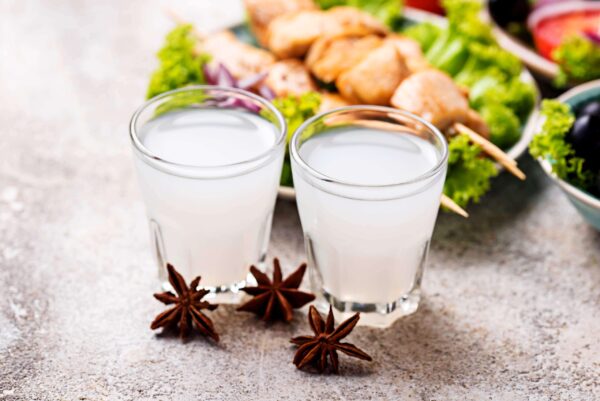
Ouzo has become a traditional drink in Greece and a cultural phenomenon. This strong aniseed-flavoured drink accompanies gatherings of friends, family feasts and long evenings in taverns by the sea. Without the right appetisers, known as meze in Greek cuisine, the enjoyment of ouzo seems incomplete. Find out which dishes are traditionally served with ouzo, why they are so important and how to pair them with this unique drink in this article.
What is ouzo and why is it drunk with meze?
Ouzo is a strong alcoholic beverage with a bright aniseed aroma, which is considered a national symbol of gastronomy in Greece. It is served chilled, with water or ice added. When ouzo is mixed with water or ice, the drink becomes cloudy and acquires a mild taste, which is perfectly complemented by a variety of appetisers.
This drink is historically associated with the concept of sharing food and drink in the company of friends. In Greece, there is an expression, ‘stin iya mas’ – ‘to our health,’ which is said before raising glasses. This ritual emphasises the gastronomic and social significance of ouzo.
Uzo is rarely perceived as a drink to be consumed hastily. It is not drunk quickly or alone –it involves pauses, conversation and alternating sips with appetisers. Meze play an equal role: they set the pace of the feast, soften the strength of the drink and allow you to enjoy the process longer. That is why in Greek tradition, ouzo is almost never served without food. The combination of drink and snacks is perceived as a single gastronomic experience.
The role of meze

The main feature of ouzo is its rich flavour. The drink has strong aromatic notes of aniseed, which require equally expressive dishes to balance it. Meze are small dishes served at the beginning of a meal to complement the drink and help reveal its flavour nuances.
In Greek taverns, meze are often brought to the table in portions so that each guest can try different flavours throughout the evening. This combination of drinking and eating turns an ordinary dinner into a long, leisurely celebration where the main focus is on socialising, sharing experiences and enjoying food.
Meze also serves a practical function, helping to create harmony between the strength of the drink and the perception of taste. Small portions allow you to gradually adapt to the intense aroma of ouzo without overloading your taste buds. This allows you to focus your attention on the drink itself and on the variety of textures and flavours on the table. This makes the tasting process more conscious and prolonged.
Main categories of appetisers to accompany ouzo
Meze is divided into different categories and there is a good reason for that. This differentiation is based on the various taste roles that the appetizers play when combined with ouzo: some highlight its scent, some tone down its strength, and some give it a feeling of fullness. Thus, the selection of meze turns into a more mindful one and you get to design a balanced feast.
1. Pickled and salted dishes
The first thing that is often served with ouzo is pickled or salted foods. They create a vivid flavour contrast with the aniseed drink, enhancing its freshness and aroma. The sourness and salt stimulate the appetite and prepare the taste buds for the next dishes.
Typical examples of this group are:
- Olives in vinegar;
- Salted sardines;
- Pickled vegetables.
These appetisers are served at the very beginning of the feast, when ouzo first appears on the table. They do not overwhelm the taste, but set the right tone for the entire gastronomic process, creating a basis for further combinations.
2. Seafood
The combination of ouzo and seafood is considered one of the most characteristic of Greek cuisine. Sea salt, the natural texture of fish and light fat content perfectly balance the aniseed notes of the drink, making the taste more rounded and clean.
Classic options include:
- Grilled dried octopus;
- Fried squid;
- Steamed mussels;
- Marinated anchovies with parsley and garlic.
After such dishes, ouzo is perceived as milder, and its aroma is revealed more fully. Seafood is often served in the middle of the evening, when guests are ready for more intense flavours but still want to maintain the lightness and freshness of the feast.

3. Cheeses and meat delicacies
Cheeses and meat meze are traditionally served when the feast is in full swing. These appetisers have a denser texture and more pronounced flavour, so they create a feeling of fullness and depth, nicely balancing the strength of ouzo. Meat and cheese meze add richness and variety to the taste sensations:
- Hard cheeses (e.g. kefalotiri);
- Sausages and prosciutto;
- Baked feta with tomatoes and hot peppers.
Such dishes are often served in small portions, allowing them to be paired with several sips of the drink. The fat content of cheese and meat softens the anise flavour of ouzo, making it less sharp and more rounded, which is especially appreciated during long evening gatherings.
4. Traditional salads and dips
Salads and dips serve as a light, refreshing element in a meze set. They do not overload the table and create a balance between saltier or fattier appetisers, allowing the taste of ouzo to remain pure and expressive. The most common options include:
- The famous tzatziki – a yoghurt dip with cucumber and garlic;
- Smoked eggplant salad.
These dishes are often placed in the centre of the table so that guests can return to them throughout the evening. The freshness and mildness of the salads and dips help to keep the meal light and make the combination of ouzo and meze more balanced and comfortable.
How to serve appetisers with ouzo
The tradition of serving ouzo with meze is an established form of socialising in which the process itself is important. In Greek culture, the table is set so that guests can spend time at it without rushing, returning to their drinks and appetisers again and again. Therefore, meze is served according to certain principles that help maintain a balance of flavours and set the right pace for the evening.
The quantity, order and serving of appetisers are designed so that the drink remains the central element of the table, with the food merely emphasising its character. A few simple rules allow you to achieve this effect and make the feast harmonious.
- Variety and rhythm. The first portion of meze is served at the same time as ouzo to give guests the opportunity to adjust their taste buds. The following dishes are brought in portions, maintaining the intrigue and allowing everyone to try different appetisers in combination with the drink.
- Temperature. Ouzo is best served chilled, and meze at room temperature or slightly warm. This combination enhances the enjoyment of food and drink.
- Order of dishes. Lighter appetisers (olives, salads) are served first, followed by more substantial ones – grilled seafood, cheeses, meat delicacies. This order helps to reveal the taste of ouzo gradually, without overwhelming the senses.
Once these principles are followed, serving ouzo and meze ceases to be a formality and becomes a well-thought-out process. This allows guests to take their time, return to familiar flavours and experience the drink in a new way in combination with different dishes. The evening unfolds naturally, without abrupt transitions, and the ouzo reveals itself gently and consistently, retaining its character from the first to the last glass.
Greek ouzo is part of the culture that brings people together around the table. It is served with a variety of meze, from simple marinated olives to complex seafood dishes. Every element of this tradition is designed to enhance the flavour of the drink and make the evening enjoyable and memorable. Next time you find yourself in Greece, don’t miss the chance to try ouzo accompanied by meze. It’s the best Greek cuisine has to offer.
Comments are closed