
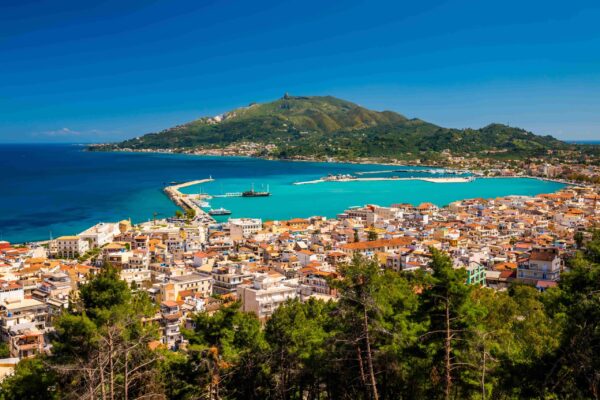
If you’re staying on one of the busy Cyclades islands for most of your holiday, you’re missing the best part of Greece.
While crowds of people fight for a small space to watch the sunset in Santorini, the Peloponnese sits quietly in the south, connected to the mainland by the narrow Isthmus of Corinth. It is a huge, mountainous peninsula that doesn’t need to create an identity for tourists. It has everything the country is famous for: ancient ruins, dramatic mountains, medieval fortress towns and Caribbean-quality beaches. But it doesn’t have the theme-park atmosphere.
To understand Greece beyond the postcard clichés, a traveller must head south into a landscape where myth and reality have been blurred for thousands of years.
Walking Through the Cradle of Myth
The history of the Peloponnese is very important. Other archaeological sites are made up of scattered remains. This site, however, is different. Here, you can find the entire history of humanity. It starts with the Stone Age and ends with the end of the classical period.
When you visit the digs at Mycenae, you’ll see that history and the stories of Homer are all mixed together. The tour starts in the ruins of the famous citadel. You enter through the well-known Lion Gate and pass the ancient walls, which the ancient Greeks thought could only have been moved by giants. This was the citadel of Agamemnon, and next to it is the Treasury of Atreus, an amazing 1200 B.C. building.
Further into the landscape lie monuments that show the absolute perfection of classical Greek architecture:
- The Theater of Epidaurus. You can hear a coin dropped in the middle of the stage from the highest stone seats.
- Ancient Olympia. The wooded valley where the first Olympic Games took place is a place with a lot of history.
- The Temple of Apollo Epicurius. This temple is one of the best-preserved classical temples in existence.
- Ancient Messene and Tiryns. There are huge sites with big defensive walls and ruins that are as old as 6500 BC. This was long before Athens became a world power.
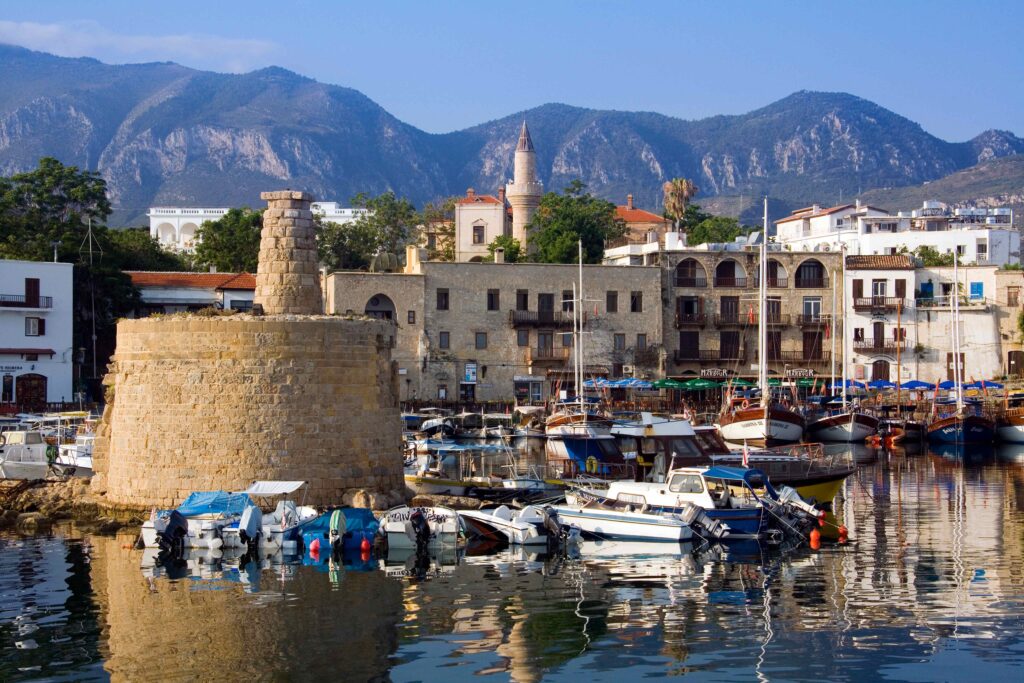
The Castle Towns Where Time Stopped
After the ancient world, the Peloponnese has some of the most amazing medieval buildings in southern Europe. These are not just empty museums; they are real, living, breathing stone settlements.
The fortress of Monemvasia is a great example of this. This medieval town is carved into the side of a huge rock in the sea. You can’t see it from the mainland. Once you’re inside the gates, you won’t be able to use any motorised vehicles. The town consists of narrow, uphill cobblestone streets, ancient stone houses, and small, charming shops.
Mystras, a ghost city on a hillside, is protected by UNESCO. As the last stronghold of the Byzantine Empire, its steep paths wind past ruined palaces, grand residences, and active monasteries filled with ancient frescoes. When you visit the huge coastal fortresses of Pylos, Methoni, Koroni, and the tall Palamidi castle in Nafplio, the region feels less like a beach destination and more like a historical adventure.
From Volcanic Caves to Emerald Waters
The landscape of the peninsula changes dramatically every few miles. In the north, the alpine landscapes of Mount Ziria and Lake Doxa look more like the Swiss Alps than the typical dry Greek island. There are lots of pine trees in the area, and the Lousios and Neda gorges are really impressive. If you go hiking there, you can follow the river past some hidden waterfalls and natural swimming pools, which are tucked away in the greenery.
In the deep south, the landscape of the Mani Peninsula is wild and harsh. This is a region of stone tower houses and barren hillsides, where the famous Diros Cave allows travellers to float on small boats through kilometres of flooded, stalactite-heavy caverns.
The coastlines match the beauty of any island in the Aegean:
- Voidokolia beach. This beach in Messenia is shaped like a perfect, symmetrical semi-circle of golden sand with turquoise water. A narrow strip of dunes separates it from a protected bird wetland.
- Elafonissos. Simos Beach is on a tiny island just off the southeastern tip of the peninsula. The beach is famous for its shifting white sand dunes and bright green water.
- Porto Heli. A deep natural harbour in Argolis, with luxury resorts and pine-fringed bays, is a quiet summer hideaway for boat owners and travellers looking for a secluded luxury experience.
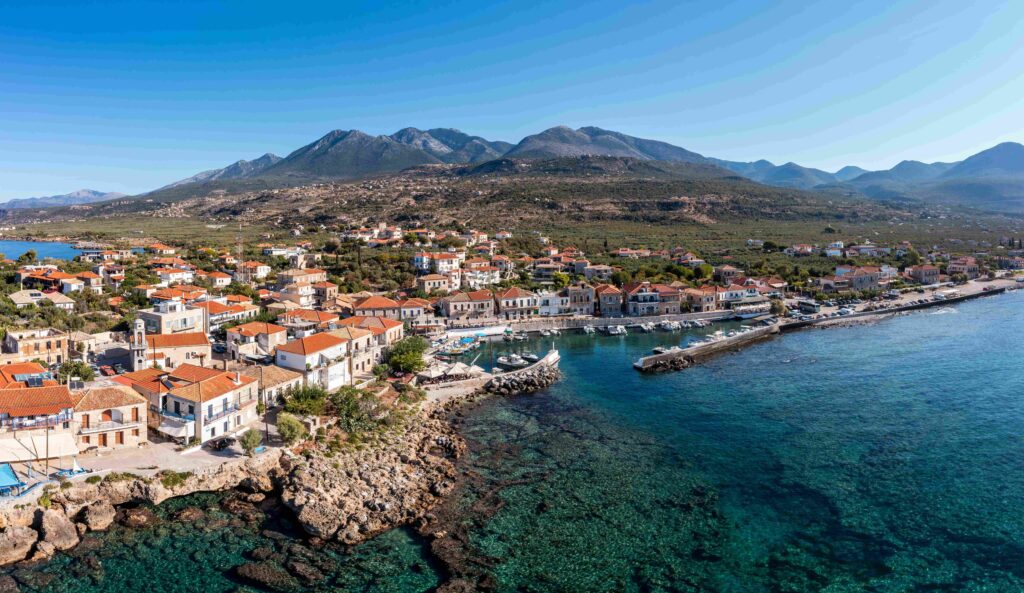
The True Kitchen of the South
The Peloponnese doesn’t rely on mass tourism like other places, so the food is simple and very local. This is the heart of Greece’s farming industry.
The valleys of Messenia produce some of the finest extra virgin olive oil in the world, as well as the famous Kalamon (Kalamata) olives. In the central plains, the city of Tripoli produces a hard, traditional cheese called graviera. In the rugged villages of Mani, people specialise in syglino, a traditional pork meat cured with smoke and packed with wild herbs.
People here take wine production very seriously. The high-altitude plains of Mantinea produce crisp, aromatic white wines, while the sun-baked hills of Nemea yield deep, velvety reds from ancient grape varieties. Here, food is seen as a reflection of the soil. It is celebrated through year-round harvest festivals rather than expensive restaurant ideas.
Exploration that Takes Time
The Peloponnese is not a place you can visit quickly for a weekend or as part of a holiday. It is a huge, complicated area that is best explored slowly and with a sense of curiosity.
To really experience it, you have to leave the main roads and take the twisty mountain roads of Arcadia, where old stone villages like Dimitsana and Stemnitsa are perched on the edge of cliffs. The true essence of Greek life is not found in a resort; it is found sitting at a wooden table in a quiet village square, drinking a glass of local Nemea red wine while the sun sets behind a mountain range that has seen empires rise and fall for three thousand years.
Comments are closed