
Greece is most often associated with fresh vegetables, olive oil and seafood. But few people know how many undiscovered flavours Greek cheeses have to offer. These products have been maturing for centuries. Each one reflects the climate, traditions and people who have been involved in cattle breeding and milk processing for generations. In Greece, cheese is part of the culture, a way of telling about the region, the seasonal changes in the pastures and the lives of the local people themselves.
Greek cheeses are very diverse: soft, creamy, dense, aged and young. Many varieties are used as a dish in their own right and as an important part of recipes: in salads, baked goods, appetisers and hot dishes.
Why Greek cheeses deserve attention
Even before reaching your table, many of these cheeses have come a long way. Shepherds on islands, in mountains and valleys have always paid attention to where their herds graze, what grasses the animals eat and how milk changes depending on the season. These observations have been passed down from generation to generation, and as a result, each cheese product is the result of thousands of years of tradition.
If you look closely at the list of famous Greek cheeses, you will see that behind each name there is a history, a region and a traditional method of production. Some of these cheeses are associated with specific holidays or rituals, others with everyday life and family feasts.
Cheeses everyone should try
In Greece, cheese consumption traditions are very diverse. It can be served as an appetiser, as part of a hot dish, or as a standalone product eaten with bread and wine. Each cheese has its own role and reveals a different aspect of Greek cuisine.
List of famous Greek cheeses:
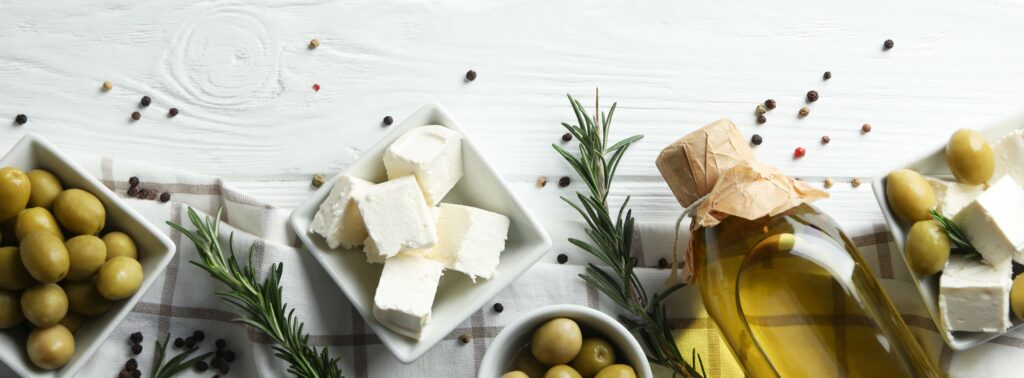
- Feta. Traditionally, feta is made from sheep’s milk or a mixture of sheep’s and goat’s milk. The cheese is aged in brine, which makes it salty and long-lasting. In Greek cuisine, feta is added to salads, especially the famous Greek salad with tomatoes, cucumbers, olive oil and oregano. It is also used in pies and hot dishes, where it melts, giving a delicate texture and rich flavour.
- Kefalotiri. Kefalotyri is a cheese that is denser and more mature than feta. Its texture allows it to be grated, making it a popular ingredient in Greek hot dishes. When lightly fried, it develops a golden crust and becomes particularly aromatic.
- Kasseri. This cheese is made from sheep’s or goat’s milk in northern Greece. It has a slightly sweet taste and an elastic texture, which makes it suitable for eating ‘as is’ or for heat treatment. Kasseri is often served sliced, placed on a plate together with fruit and nuts.
- Mizithra. There are several types of Mizithra: fresh and aged. Fresh Mizithra has a delicate, almost creamy texture reminiscent of cottage cheese, but retains the characteristic taste of cheese. It is often added to salads or served with honey, which creates a surprising contrast.
- Manouri. It is made from the leftover milk of sheep and goats after other cheeses have been produced. It is soft and slightly sweet, making it ideal for eating with fruit, jams or honey. In some parts of Greece, it is used as a cheese for dessert casseroles, where it becomes creamy and rich in flavour.
- Graviera. This cheese melts well, making it an excellent ingredient for casseroles or hot appetisers. It is also often used sliced alongside wine and fruit when a moderate but distinctive flavour is desired.
- Ladotiri. Ladotyri is produced using a specific ripening technique, whereby the cheese is soaked in olive oil with herbs. This gives it a distinctive aroma and makes its texture slightly oily. It is often served with bread, topped with slices of tomato and fresh herbs.
- Kaloufatiri. The name of this cheese comes from the region where it is produced. It has a rich, salty taste with a slight sourness. It is suitable for eating on its own or adding to salads or hot dishes. Its texture is denser than feta, but not as hard as mature cheeses.
- Boukari. Bukari has a pronounced aroma of pasture milk and a dense texture. Its taste is difficult to compare with classic cheeses. It is denser, more intense and leaves a warm, slightly nutty aftertaste.
- Sikotrano. This cheese is produced on one of the islands in the Aegean Sea. Sikotrano is unique in that the artisans use local milk and herbs that grow only on this land. This gives the cheese a special aroma that cannot be replicated anywhere else.
Each of these cheeses has its own flavour characteristics, method of preparation and regional differences. Not all of them are familiar outside Greece, but each deserves attention, especially from those who consider themselves true connoisseurs of gastronomy.
How to enjoy Greek cheeses properly
Greek cheeses are standalone products, but they are often used in traditional dishes. Before serving cheese, let it stand at room temperature. This brings out its aroma and makes the flavour more complex. Many cheeses go well with olive oil, honey, nuts or dried fruit.
White cheeses, such as feta, are an excellent addition to fresh salads. Aged cheeses are denser and have a more pronounced flavour that goes well with bread, wine and desserts. Soft cheeses, such as manouri, are best enjoyed with fruit or jam. Before buying or eating cheese, find out about its origin and how to serve it properly.
Comments are closed